
Blog
How to Create a Cozy Atmosphere with a Bedroom Night Light


A bedroom can look lovely in daylight and still feel harsh after dark. I notice it most when the overhead light is on: every corner is bright, the room feels flat, and settling down becomes harder than it needs to be.
A bedroom night light can change that. It adds a softer layer of light, helps with late-night trips across the room, and can make a bedside corner feel more personal. The trick is choosing the right spot, color, and brightness for the way you use your bedroom.
Start with the mood you want
Before choosing a bedroom night light, think about what you want it to do. Are you looking for a gentle glow beside the bed, a light for reading, or a low guide along the path to the bathroom? One lamp can serve more than one purpose, but it helps to choose the main job first.
For a calm, cozy feel, I like lighting that sits in the background instead of calling attention to itself. It should make the room comfortable to move through without making the bed feel like a brightly lit stage.
Take a look at your bedroom after sunset. Notice where shadows fall, which areas feel too bright, and where you would like a little more light. That quick check can help you choose a useful location before you buy anything.
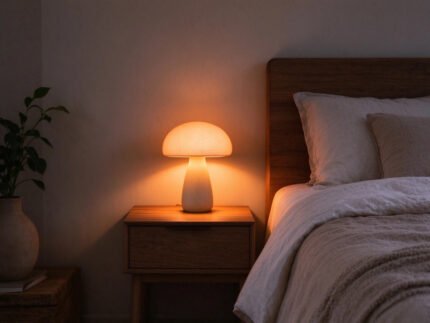
Where should you put a bedroom night light?
The best place depends on what you do there. A bedside table works well for a lamp you use while winding down, reading, or getting ready for bed. A low lamp near the doorway or along a walking route can help you move around without switching on the main ceiling light.
Try to keep the light out of your direct line of sight when you are lying down. If you can see the bare bulb from your pillow, it may feel too bright even when the lamp itself is small. A shade, frosted cover, or light aimed toward a wall can soften the glare.
Beside the bed
A bedside night light is an easy place to start. Put it on the side you use most, and check that the switch is easy to reach without sitting up or leaning across the bed.
If you read in bed, make sure the lamp gives you enough light for the page without shining into your partner’s eyes. A focused bedside lamp may work better for reading, while a lower, softer light can create a more relaxed glow around the rest of the room.
For a shared bedroom, placement matters even more. A lamp with a shade can direct light toward your book or bedside table and keep it from spreading across the whole bed. If you and your partner have different evening routines, separate bedside lights can make the room easier for both of you to use.
Near the floor
A low light can be useful if you get up during the night. A plug-in night light, a small lamp on a low shelf, or a light near the bedroom door can gently mark the route without filling the whole room with brightness.
Keep it clear of bedding, curtains, and places where you might kick or trip over it. If you have children, pets, or a narrow walking path, check that cords and plugs are out of the way.
Try walking the route once in the evening. Look for furniture corners, rugs, or low objects that are hard to see. The light should help you notice the path without shining straight into your eyes.
In a corner or near a wall
A lamp placed near a wall can create a wider, softer wash of light. This is a simple way to add ambient bedroom lighting without pointing a bright source across the room.
Try the lamp in a corner, on a dresser, or on a shelf. Then lie down and look around the room. If the light makes a hard bright patch, move it farther from the wall or change the angle.
A wall can also help spread the glow more evenly. Pale walls reflect more light, while darker paint and textured surfaces absorb more of it. Try a few positions before deciding that a lamp is too dim or too bright.
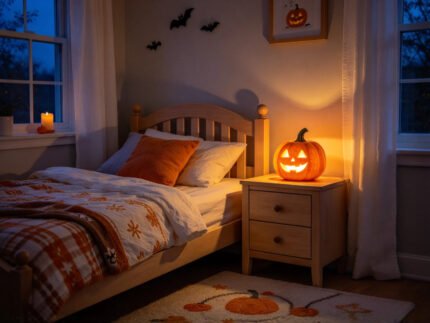
Choose a warm night light
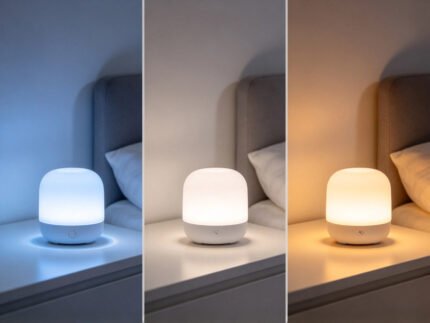
Color temperature describes whether a light looks warm and yellowish or cool and bluish. For a cozy bedroom, many people prefer a warm night light because it gives the room a softer, more familiar look.
On product labels, color temperature is often shown in Kelvin (K). A lower number usually looks warmer, while a higher number tends to look cooler. The U.S. Department of Energy’s guide to LED color temperature explains how color temperature describes the appearance of a light source and can affect how a room looks.
There is no one perfect number for every home. Wall paint, lampshades, furniture, and even the light from your windows can change how a bulb looks in your room. If you can, test the light after dark before choosing a permanent spot.
Think about the rest of the room
A warm bulb can look different against white walls than it does against wood, cream, or darker paint. If your bedroom already has bedside lamps, try to choose a night light that feels comfortable alongside them.
Matching every bulb exactly is not essential. Still, a room can feel unsettled if one lamp looks yellow, another looks blue, and the overhead light is much brighter than both. Try turning on your usual evening lights together and see whether the mix feels calm.

Keep practical needs in mind
Warm light is a good starting point for a relaxed mood, but comfort matters more than a rule. If you need a brighter light to read, dress, or find something in a drawer, use a separate task light for that job.
A night light does not have to do everything. Keeping the soft ambient light separate from brighter task lighting makes it easier to change the mood without giving up useful light.
How bright should a night light be?
Use the lowest brightness that still feels useful. A dim glow may be enough to find your way across the room, while reading or folding clothes may call for more light.
If your lamp has a dimmer, try several settings at night. Start brighter, then lower the level until the room feels comfortable while you can still see where you are going. A dimmer is useful because the same lamp can serve different purposes at different times.
If the lamp is not dimmable, you still have options. Move it farther from the bed, use a shade that softens the bulb, or point it toward a wall instead of across the room.
Avoid harsh glare
Glare often comes from seeing the light source directly. A bare bulb at eye level can feel sharp, even if it is not very bright.
Look for a shade or diffuser that hides the bulb from the usual view of the bed. If you already own a lamp you like, try changing its position before replacing it.
Watch for bright spots and deep shadows
One small lamp can leave the rest of the room dark. That may be fine if you want a quiet glow, but it can feel uncomfortable if you need to walk around.
Try adding a second low light in a different part of the room, or moving the lamp so the light bounces off a wall. The goal is not to make every surface equally bright. It is to avoid a sharp contrast between a glaring lamp and a pitch-dark path.
Layer your ambient bedroom lighting
A cozy bedroom usually feels better with more than one kind of light. I think of it in simple layers: a main light for everyday tasks, a bedside light for reading or getting ready, and a softer accent light for the evening.
You do not need a complicated setup. A ceiling light and one well-placed bedside lamp may be enough. If you have a dark corner or a long path to the door, a small extra light can fill that gap.
Give each light a job
The overhead light is handy when you are cleaning, changing sheets, or looking for something. A bedside lamp can make reading more comfortable. A small night light can guide you through the room without waking you up with a blast of brightness.
When each light has a clear purpose, it becomes easier to choose what to switch on. You may find that you use the overhead light less in the evening once you have a softer option nearby.
Use shape and texture to soften the glow
The lamp itself can help set the mood. Fabric shades, frosted glass, and diffused covers can make a light feel less direct. A rounded shape or a playful accent lamp can also bring a little character to a bedroom.
If you like decorative lighting, choose a piece that suits the room instead of adding clutter. A creative lamp can become a small focal point on a dresser or bedside table. Browse creative lamps for distinctive accent ideas.
For a playful touch, a fruit-shaped lamp can add color to a bedside or shelf. Take a look at the fruit lamp collection for ideas.
A sculptural lamp can be a conversation piece in a guest room or reading corner. The levitating lamp collection offers a more unexpected look.
If you prefer a softer, nature-inspired feel, a mushroom-shaped lamp can sit comfortably on a nightstand or dresser. Explore the mushroom lamp collection.
A tree-shaped lamp can bring a little height and visual interest to a shelf or side table. See the tree lamp collection for decorative options.
For rooms where a table lamp would take up too much space, a wall-mounted light may be worth considering. Browse the wall lamp collection.
Make the setup work for your routine
A bedroom should work for the people who use it. If one person likes to read and the other wants a dark room, try a focused lamp with a shade that directs light toward the page. If you share a room with a child, a small low-level light may make bedtime feel more reassuring.
Think about the way you move through the room, too. Keep the path from bed to door clear, and place the switch where you can reach it easily. The best night light is the one you can use without rearranging your whole routine.
If you use your bedroom for more than sleeping, let the lighting change with the activity. A brighter light can help when you are getting dressed, while a softer setting may feel better when you are winding down. A dimmable lamp makes that shift simple.
Think about the season, as well. In winter, you may spend more time in the bedroom before sunrise or after work. In summer, longer evenings may mean you use the lamps later. A flexible setup can adapt without adding more fixtures.
Common bedroom night light mistakes
Choosing a light that is too bright
A lamp can be attractive in a shop and still feel harsh beside the bed. Check its brightness in the room at night, not just during the day. If it feels too strong, try a lower setting, a softer shade, or a different position.
Pointing the bulb toward the bed
A light source that shines directly at your pillow can be distracting. Turn the lamp toward a wall, move it lower, or choose a shade that hides the bulb from view.
Using only the ceiling light
The overhead light may be practical, but it can leave the room feeling flat in the evening. Add a smaller light at bedside height or near a corner to make the space feel more layered.
Buying before checking the outlet and surface
Measure the spot where you plan to put the lamp. Check whether the cord will reach, whether the base fits, and whether the nearest outlet is in a safe, convenient place.
Forgetting how the light looks with the door closed
A night light near the doorway may look different when the door is open or closed. Test both positions if you use the light to guide a nighttime walk.
A quick way to test your lighting
You do not have to get everything right on the first try. Move one light at a time and check the room from the bed, the doorway, and the route you walk at night.
Try this simple routine:
- Turn off the overhead light.
- Switch on the night light from the place where you plan to use it.
- Lie down and check for glare.
- Walk the usual path to the door.
- Adjust the position or brightness if a spot feels too bright or too dark.
Small changes can make a surprising difference. Moving a lamp a few inches, turning it toward a wall, or swapping in a warmer bulb may be all the room needs.
Make your bedroom feel like yours
A cozy bedroom is not about following a strict lighting formula. It is about making the room feel comfortable for your routines, your style, and the way you like to wind down.
Start with one bedroom night light, place it where it solves a real problem, and pay attention to how it feels after dark. Once that first light is working, you can decide whether the room needs another layer or whether the simple setup is just right.
The best result is usually a room where the light is useful but not distracting. When the brightness is gentle, the color feels comfortable, and the lamp sits in the right place, a small night light can make the whole bedroom feel more welcoming.